Implementing Click & Collect across Europe
Sally's click and collect journey was incredibly inconsistent and lacked clear messaging throughout the user journey. In order to properly utilise the company's many stores across Europe in online shopping, one of my first tasks as UX Designer was to implement features to fix this.
My Role: UX Lead, UI Lead
Background
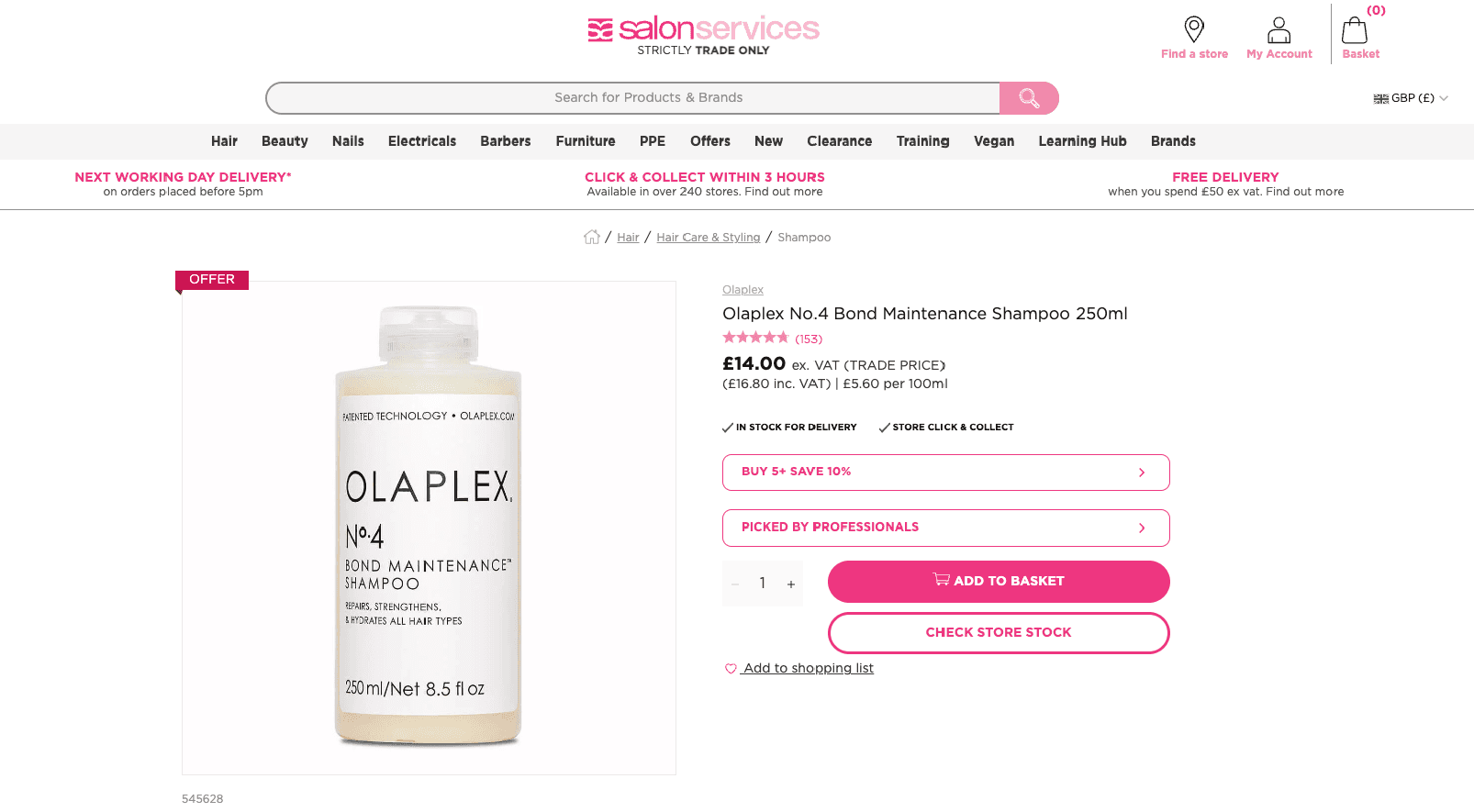
Click and collect did exist on Sally UK websites, however the user experience regularly obfuscated pertinent information and would regularly confuse customers between product and basket pages displaying conflicting information.
There was no consistent messaging around product availability for click and collect on PDP
Users had to continually bring up the store finder to search for stock in their local store
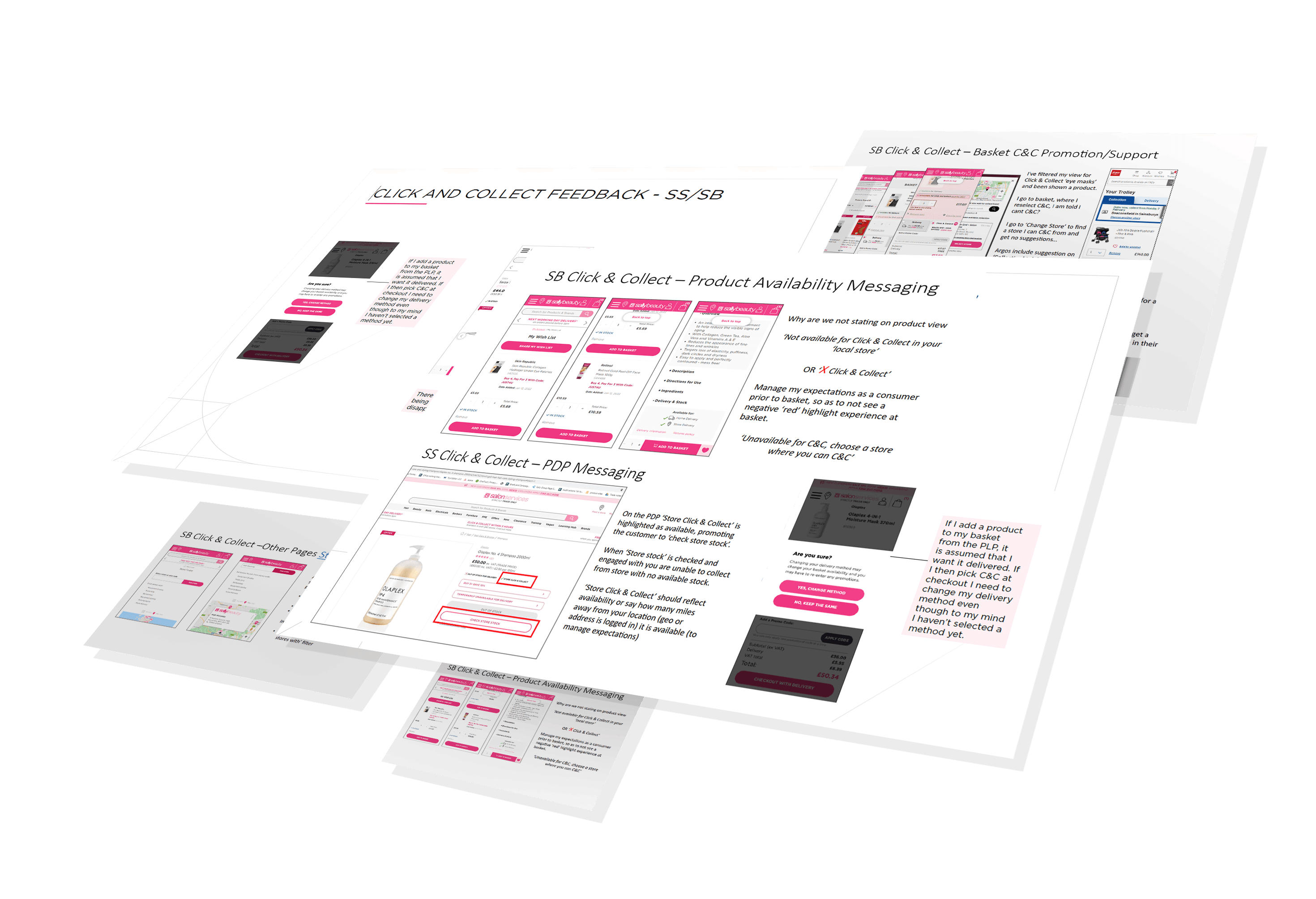
PLP displayed 'out of stock' even if items were available for click and collect
Users would get all the way to payment before discovering items in the basket were not in stock for click and collect
Sally is still a very brick and mortar store focused business, so this approach to click and collect really needed addressing. I led the discovery phase with the ecommerce and stores team to implement a better UX.
Research and discovery
Setting a Clear Brief With End User Focused Goals
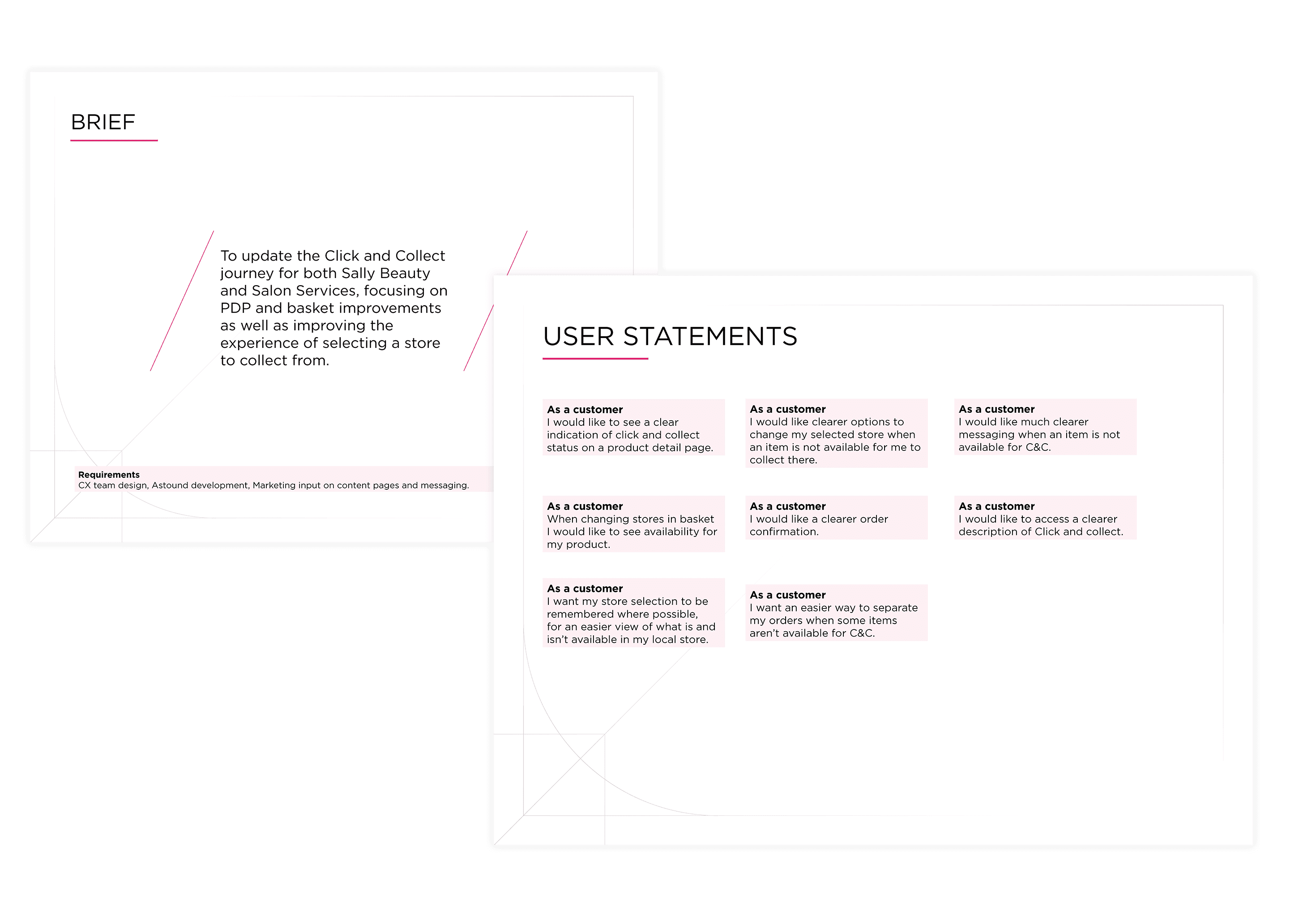
Being a project that spanned many areas of a complex business, it was really important that our goals were clear and also clearly understood across teams. The briefing document I created clearly listed requirements from all internal and external partners as well as potential risks from each provider. Main points of the brief were broken down into user statements, most from an end user perspective, but some from business critical stakeholders. This allowed us to measure success much better against key UX expectations.
Improving Product Pages
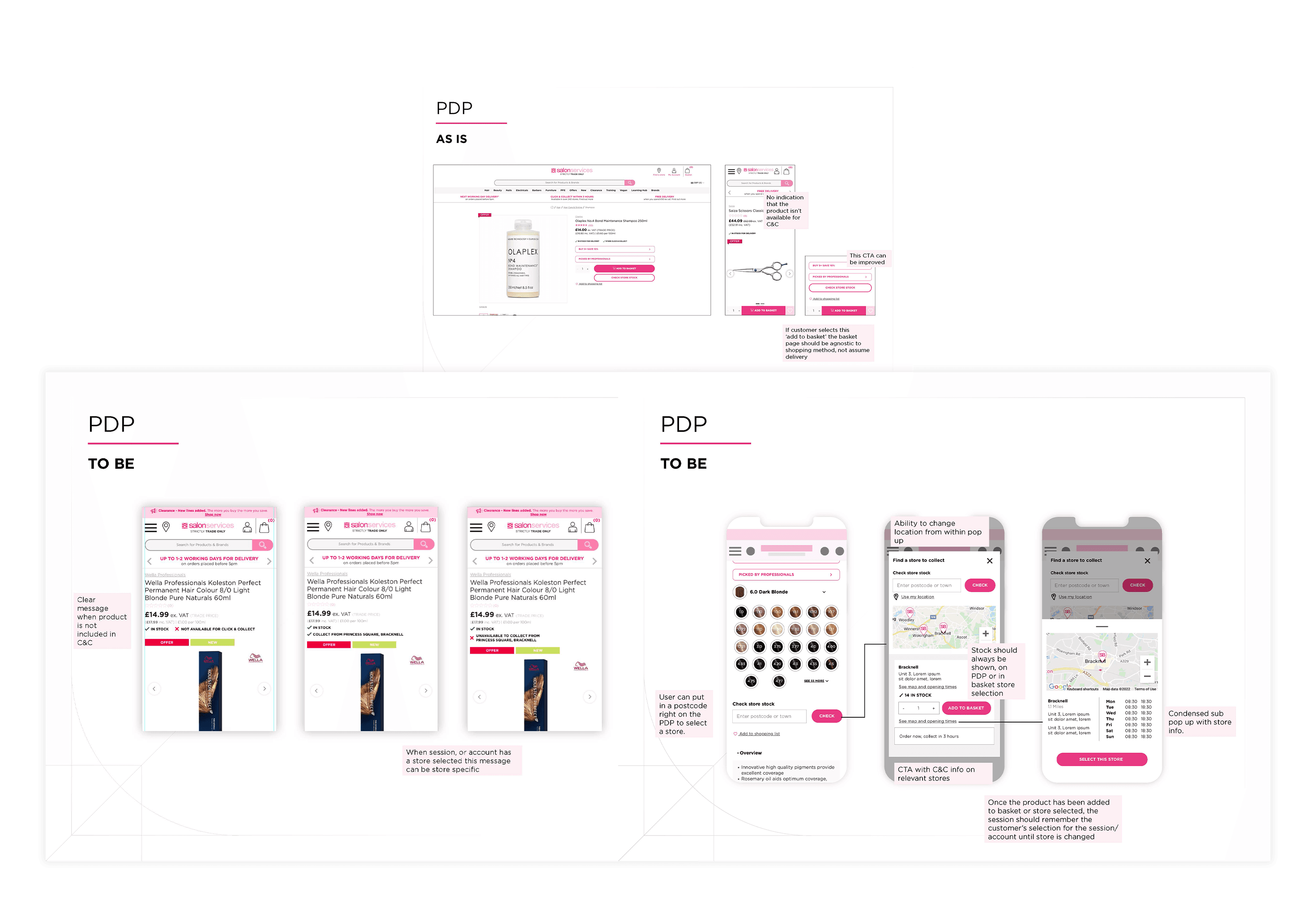
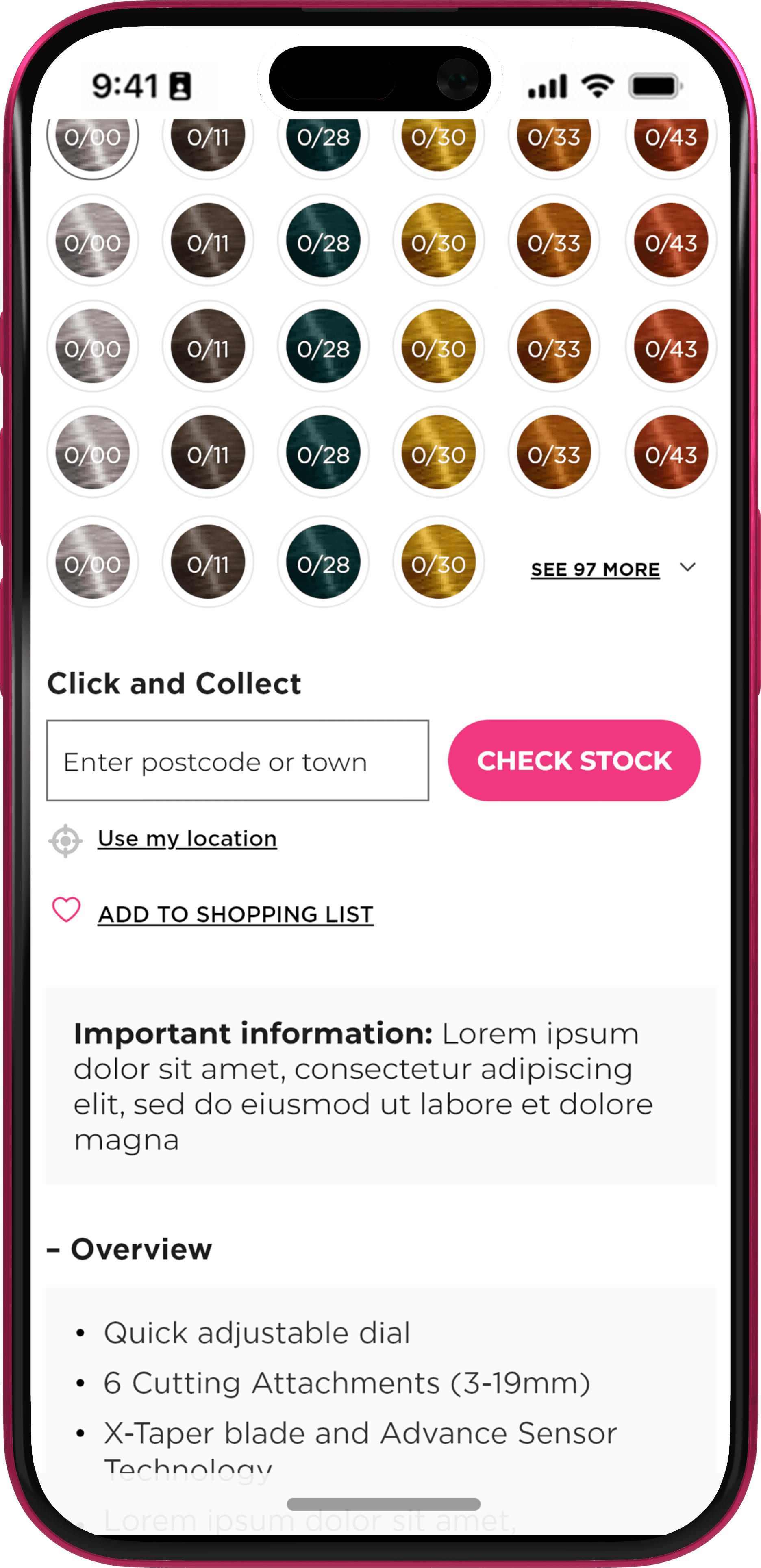
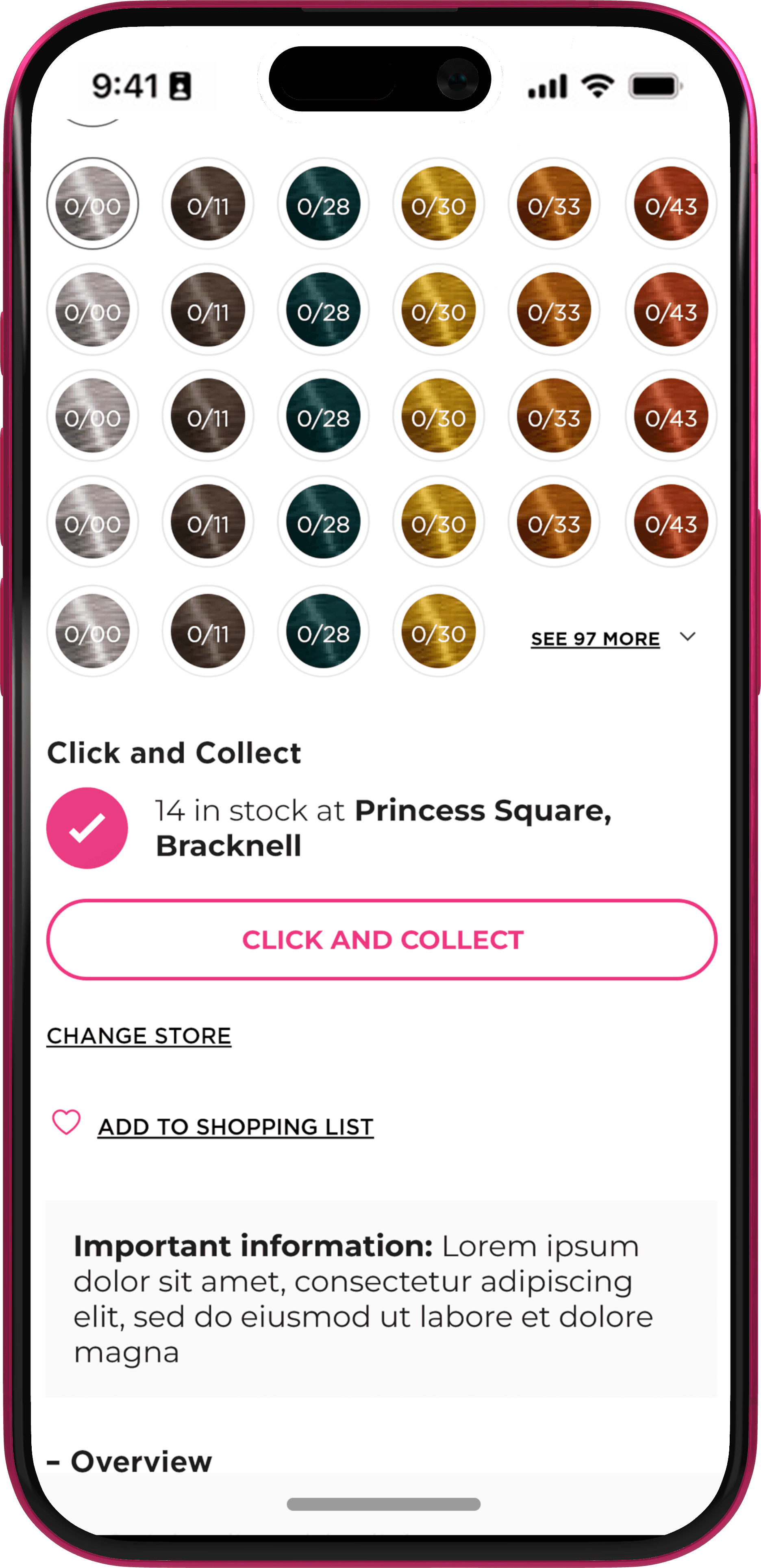
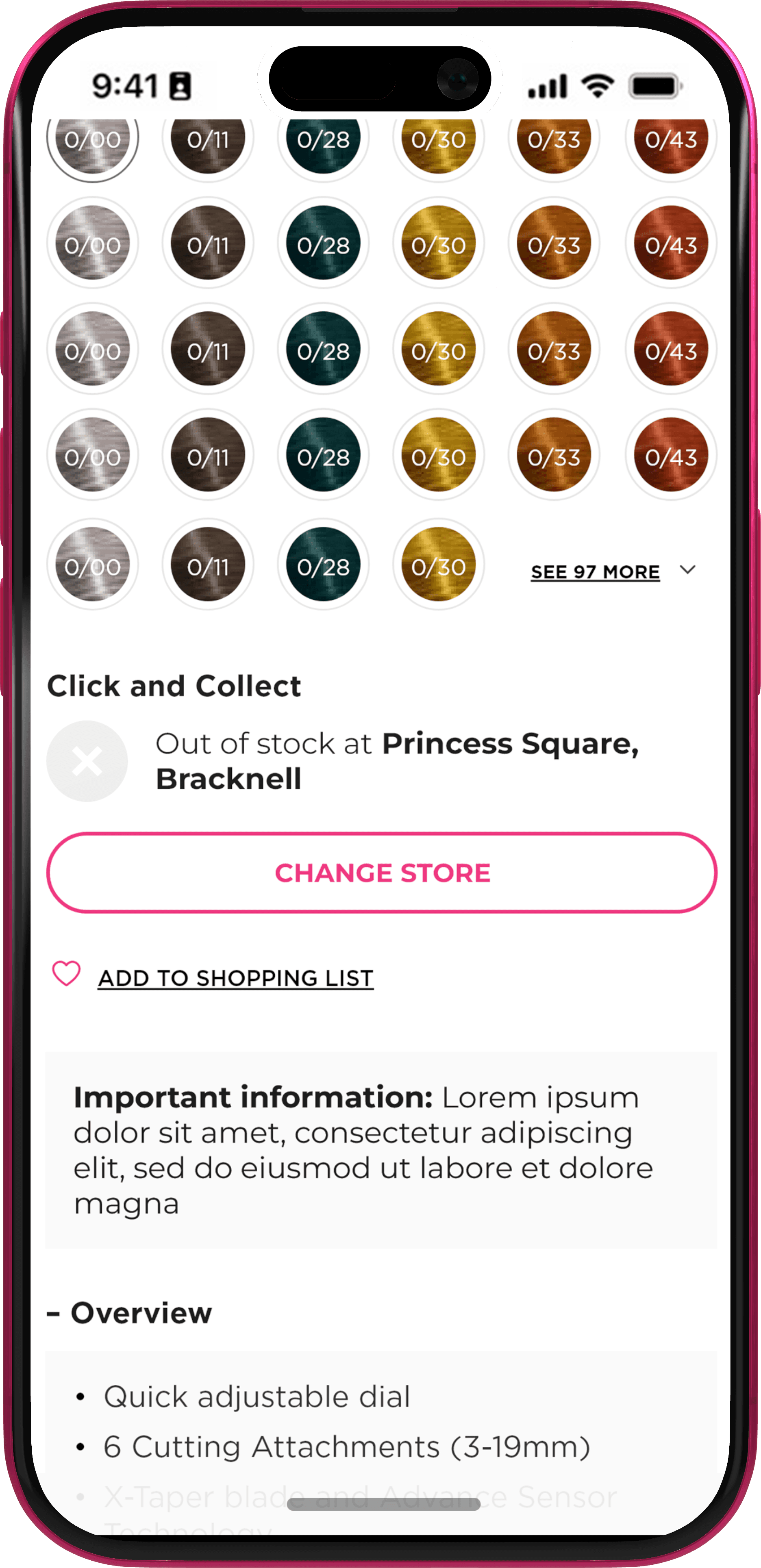
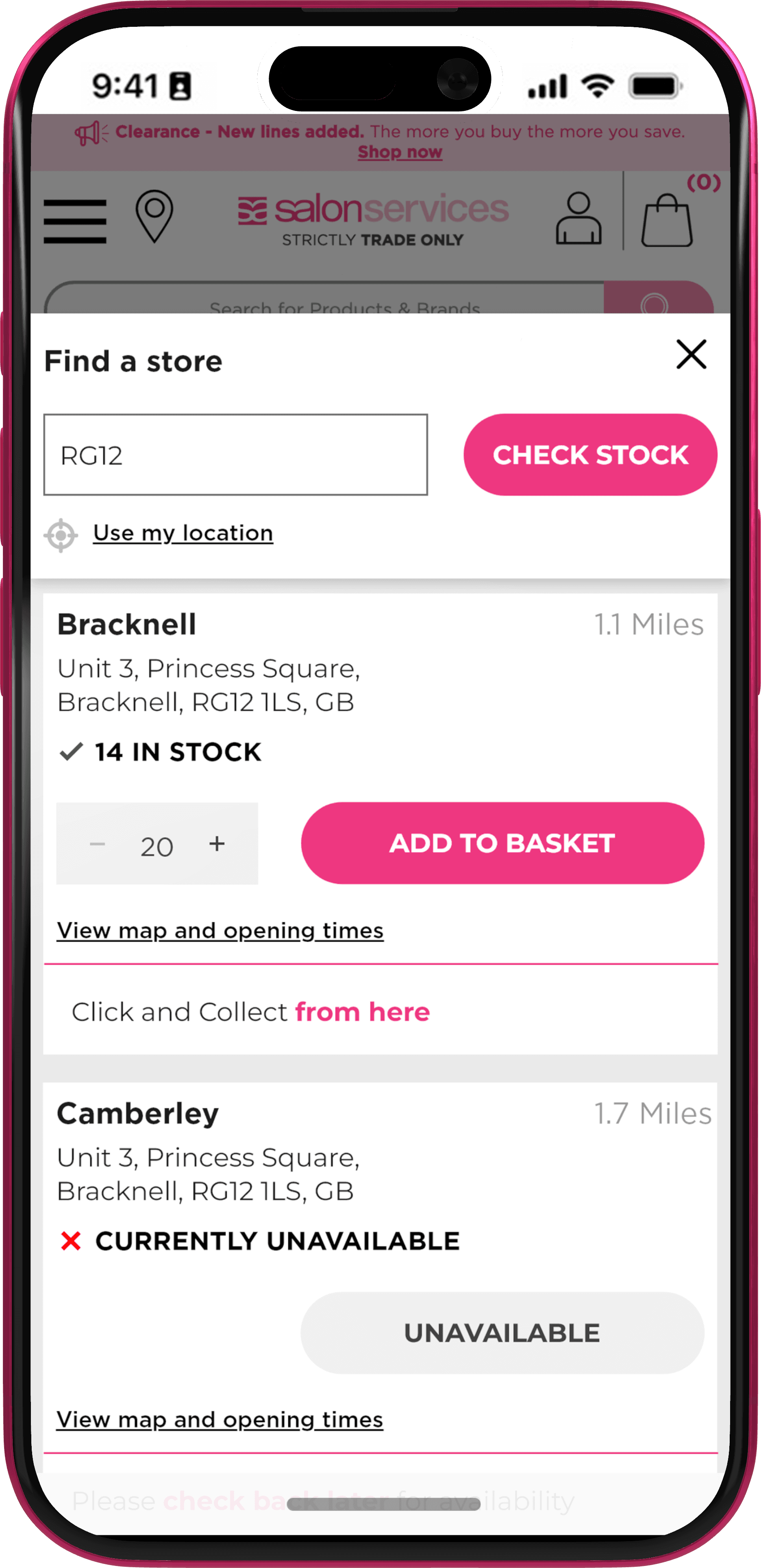
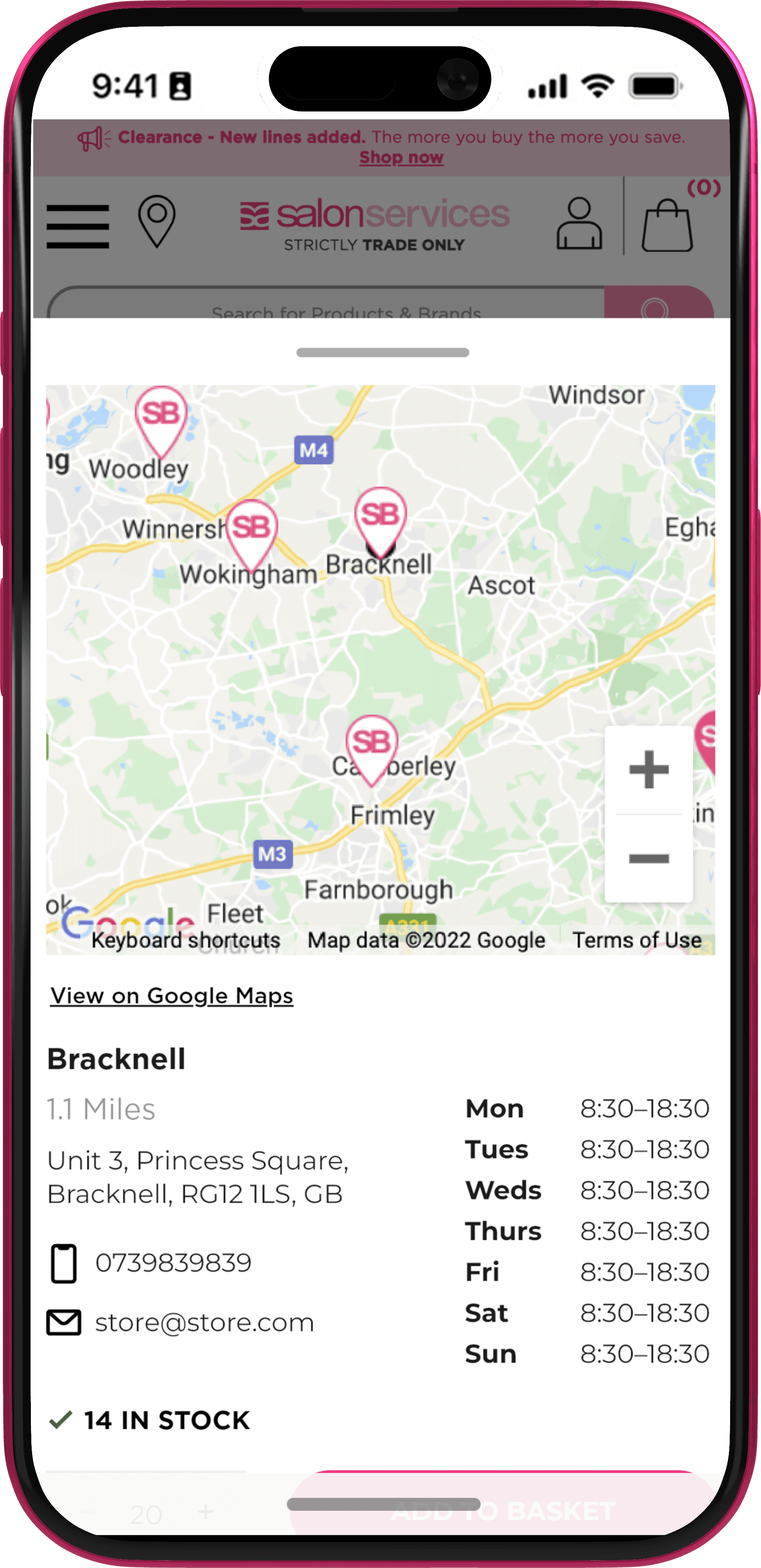
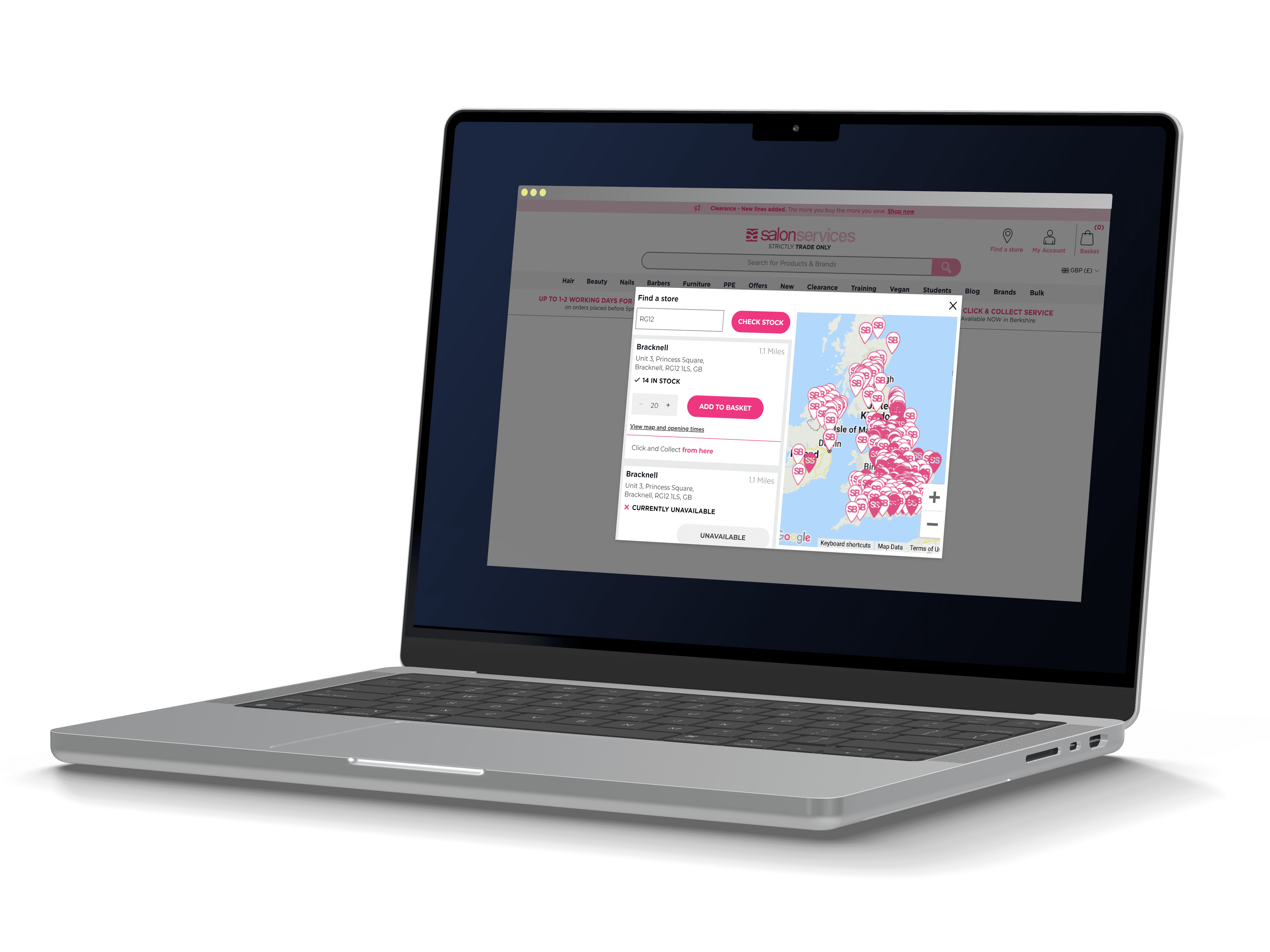
As stated before, product pages and product listing pages were incredibly inconsistent with messaging for click and collect. Ideation was focused around clearing up this messaging, which primarily focused on prominently showing click and collect availability for all products on PLP and PDP, as well as making the store selection process much more useful in displaying stock. One major feature was in allowing store selection to be remembered across sessions – once a user had selected a store, the PDP would by default prominently show stock for that selected store to the user. This both streamlined the user's click and collect journey, and reduced conflicts on the basket step. We also greatly improved the store finder function to better display stock and provide better information to the customer on the store itself, such as opening times and parking availability.
Reducing Friction In Basket
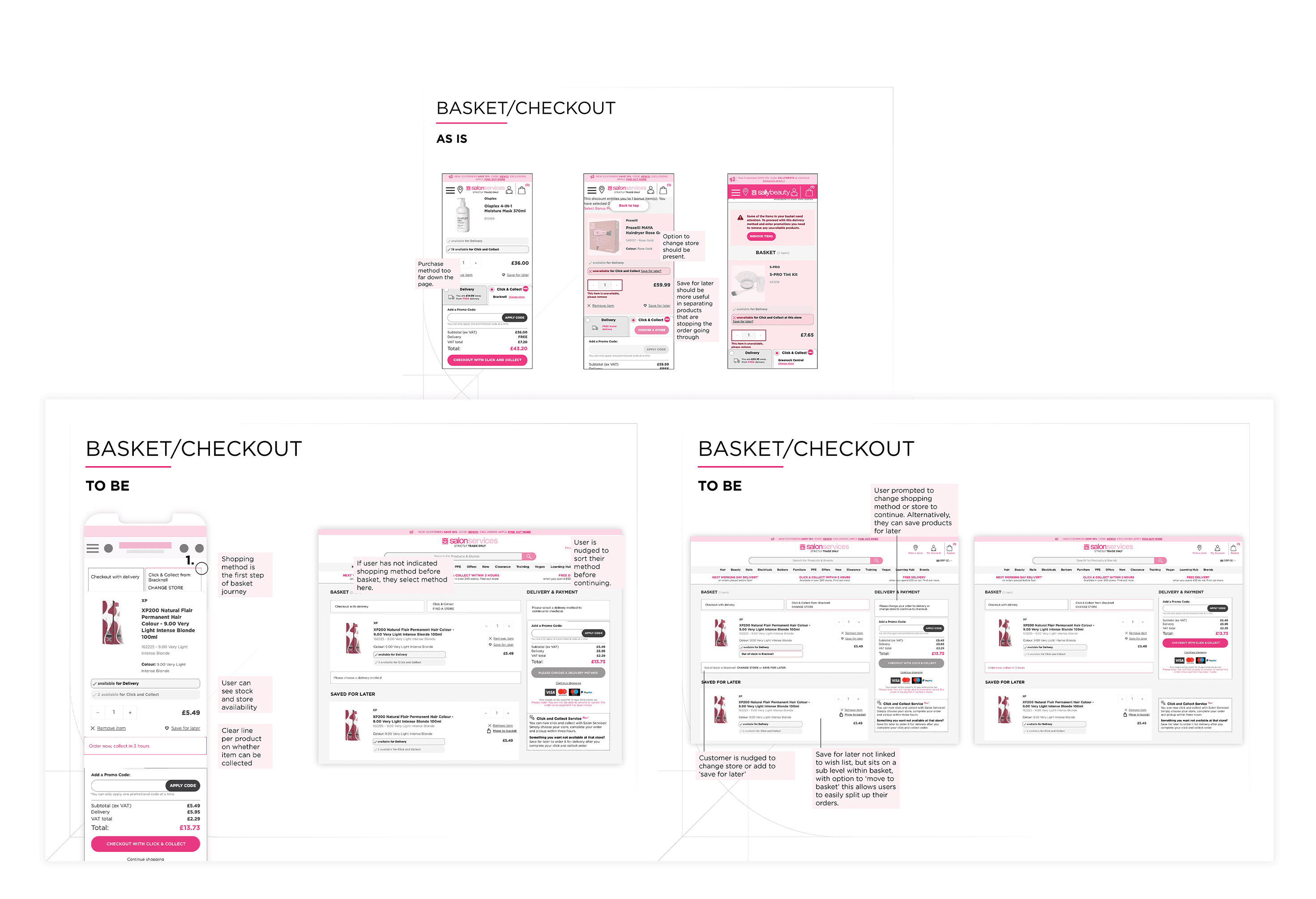
The basket represented a significant challenge to the click and collect journey, with the existing implementation having users select click and collect right before payment, making users who had not been proactively checking stock throughout their journey suddenly potentially see lots of 'out of stock' errors. In addition to this, there was a lot of generic 'out of stock for click and collect' messaging that did not specify a store or any alternatives for the user. This was leading to a lot of abandoned baskets. As a solution, we gave click and collect the same footing as delivery as a header in the basket. If a user had not selected a store yet, they could upon selecting this option. Our improved store finder would then allow the user to see if their store had all items in stock. If not we would automatically run a search for nearby stores that did have all items in stock and would display this messaging to the user both inside and out of the store finder to highlight that their items were available nearby. We also improved messaging around our 'save for later' function so that items could be stored for a separate order if they were causing issues.

Supplying Prototypes and Functional Specs
This project required co-operation across the business for a successful UX rollout. As such, creating clear and readable prototypes and functional spec documents was as important as ever. Sally partnered with an external developer for most UX projects so detail was key, but this process was also shared with store teams, customer service and other stakeholders for transparency. Many elements of the journey relied on calls to our ERP system and so we worked closely with both our development partners and store staff to makes sure that implementation was correct, usable, and that store colleagues were receiving the necessary data.
Results
This project was a big success for the business over the next quarter we saw click and collect usage rise from 20% to 30% of total orders in the next quarter and YoY saw a significant uplift. During this project the amount of inconsistent UI from before having a dedicated UX function became clear and through it I was also able to communicate the need for us to create a design system to better serve customers in the future.